



Keeping cigars in suitable storage starts with understanding the container and the humidity control inside it. For someone researching how to use boveda humidor bag instructions, the first distinction is between the reusable outer bag and the replaceable pack it contains. Each component has a separate role, so opening the packaging correctly matters. A humidification pouch needs to remain intact while it regulates moisture within the enclosed space. A larger collection introduces different practical questions, including shelf layout, access and routine monitoring. Owners considering a humidor cabinet should plan those details alongside capacity, rather than assuming that more storage space automatically means less maintenance.
Understand the bag and the pack
A purpose-made storage bag provides an enclosed space, while the humidity pack works inside it. These are separate items, and instructions for opening the bag should not be confused with instructions for preparing the pack.
Opening methods vary by bag size and design. The manufacturer describes different procedures for its smaller bags and its medium or large versions, so owners should check the instructions for the product in hand. Once opened, the bag should close fully without its contents obstructing the seal.
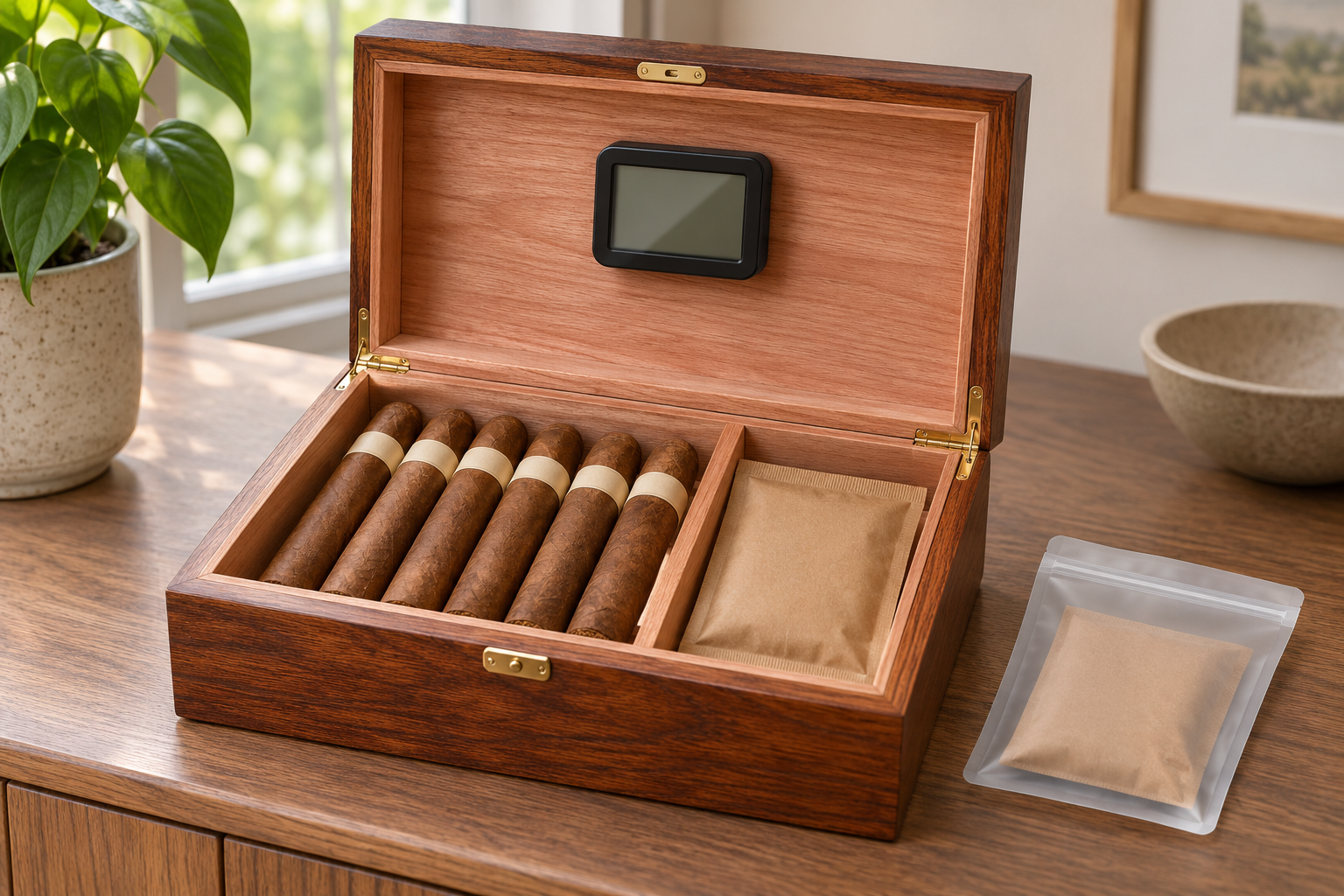
If a replacement pack has a clear plastic overwrap, that wrapping is removed before use. The brown packet itself must not be cut or opened. It is placed inside the storage container, which is then closed. Adding water or opening the packet is not part of this setup.
There is also little value in treating every humidity product as interchangeable. Owners should confirm the pack type, intended use and recommended quantity before installation. A label intended for preparing an empty wooden container should not be mistaken for an everyday storage setting.
Keep storage checks simple and repeatable
A useful routine starts with the parts that are easy to overlook: whether the closure is secure, whether the bag is damaged and whether the pack needs replacement. Recording the installation date makes later checks more informative.
Replacement guidance should match the particular product. The manufacturer’s bag instructions recommend monitoring the included pack for increasing firmness and replacing it before it becomes completely solid. The outer bag can be reused with a suitable fresh pack, provided it remains in good condition.
Owners should avoid assuming that an estimate on one product applies to every container. A bag used occasionally and a frequently opened wooden unit are different setups. Checking the relevant instructions is more reliable than adopting a replacement schedule from an unrelated accessory.
For an organised routine, a brief note can record the container, pack installed, installation date and any observations. This is particularly helpful when several containers are in use, as it reduces the chance of confusing older packs with recently replaced ones.
Plan larger storage around access
Larger furniture-style units need a practical layout as well as sufficient capacity. Before choosing one, owners can measure the boxes and trays they intend to store and compare those dimensions with the usable internal space.
External dimensions alone do not show whether a particular box will fit on a shelf. Door clearance, adjustable shelving and the space needed to remove items also deserve attention. A unit that fits neatly into a room may still be awkward to use if its door cannot open fully.
The humidity system and monitoring equipment should remain accessible after loading. If checking a sensor or replacing a pack requires emptying several shelves, routine maintenance becomes unnecessarily difficult. Keeping a simple inventory can also reduce repeated searching and handling.
Owners should follow the unit manufacturer’s directions for setup, loading and maintenance. Instructions for a compact bag do not provide a complete operating guide for a larger installation, particularly where powered equipment or a separate humidification system is involved.
Separate initial preparation from ongoing care
Some wooden storage products require seasoning before normal use. This preparation stage should follow the instructions supplied for that unit and the chosen seasoning method.
When using the manufacturer’s 84% relative humidity seasoning packs, all cigars must first be removed from the wooden container. They need separate suitable storage during the process. The high-humidity seasoning stage is intended for preparing the wood, rather than maintaining cigars inside it.
Planning that temporary space before starting avoids an unnecessary scramble halfway through setup. Owners can also use the opportunity to check closures, organise accessories and write down the maintenance requirements for the finished arrangement.
A manageable cigar storage setup makes it easy to check the enclosure, monitor humidity and replace consumable items according to their instructions. Keeping those tasks straightforward helps owners maintain a consistent routine once preparation is complete.