


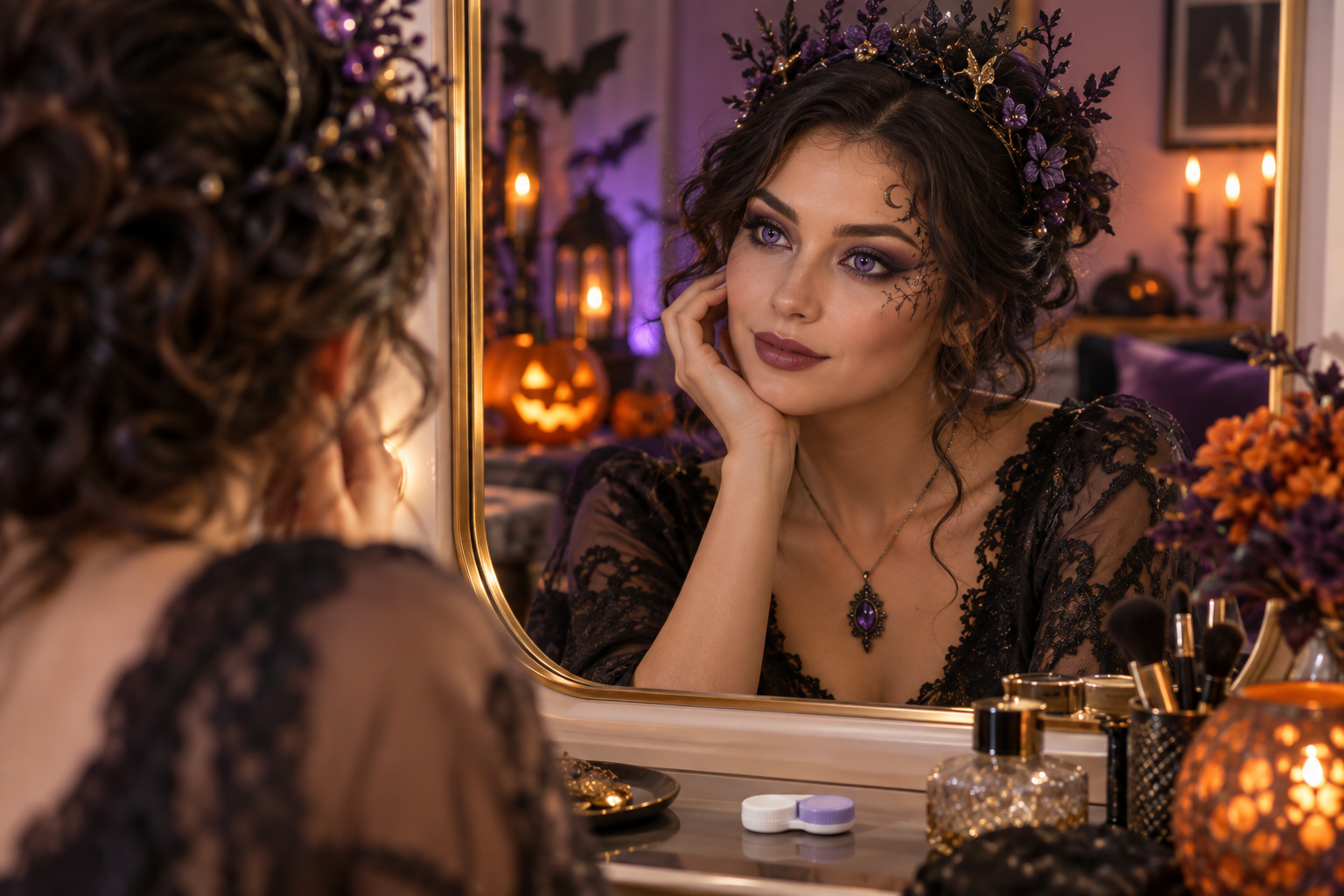
The right halloween eye contacts can make a costume feel complete by giving the wearer a more convincing character transformation. Colour, pattern and coverage all influence the final effect, so the best design will depend on the makeup, lighting and theme of the event. Some halloween contacts create a subtle supernatural appearance, while others produce a theatrical result designed to stand out in photographs. Before selecting halloween contacts, wearers should also consider comfort, visibility and how long the lenses will be worn.
Match the Lens Design to the Character
A successful costume usually has one clear visual direction. The eye design should support that direction rather than compete with the clothing, hair and makeup.
Solid white, black or red lenses can suit horror-inspired characters such as vampires, demons and possessed figures. Brighter colours may work well for fantasy characters, aliens, mythical creatures or animated looks. Natural-looking shades can provide a more understated change for costumes that rely on beauty makeup rather than dramatic special effects.
The intensity of the design should also match the setting. A subtle pattern may look effective at a daytime event but become difficult to notice in a dark venue. Stronger colours and high-contrast designs are usually more visible under dim lighting and in flash photography.
Wearers should view product images carefully before making a choice. The natural colour of the iris can affect the final appearance, particularly when a lens has a semi-transparent design. Results may therefore vary between people.
Coordinate Lenses With Makeup
Costume lenses tend to look more convincing when the surrounding makeup supports their colour and style. Warm red and orange shades can complement fiery or demonic eyes, while cool silver, blue and purple makeup may suit ghostly or fantasy-inspired designs.
There should still be some contrast between the eyes and the makeup. If every element uses the same colour, the lenses may lose their impact. A dark liner or carefully blended shadow can frame the eyes and make an unusual iris pattern more noticeable.
Makeup should be planned with safe lens wear in mind. Lenses are generally inserted before cosmetics are applied, helping to reduce the risk of transferring powder, paint or oils onto their surface. They should then be removed before the makeup is cleaned away.
Loose glitter and heavy pigments require particular care because small particles can enter the eye. Water-based face paints and controlled application techniques can help minimise fallout around the lash line.
Think About the Full Costume
The most effective look is not always created by choosing the most dramatic lens available. Balance matters across the entire costume.
An elaborate outfit with detailed prosthetics or bold face paint may benefit from a relatively simple eye colour. By contrast, a minimalist costume can use unusual lenses as its main visual feature. This approach can be especially effective for characters recognised by a distinctive gaze.
Accessories also influence the result. Wigs, masks, false lashes and coloured lighting can change how the eyes appear. A wearer should test the complete look before the event to make sure each element remains visible and works together.
A trial also provides an opportunity to take photographs under different lighting conditions. Some colours appear striking in person but look less noticeable through a camera, while reflective designs may become more prominent when photographed with a flash.
Prioritise Fit and Comfort
Decorative lenses sit directly on the eyes and should be treated as personal eye-care products rather than ordinary costume accessories. A qualified optometrist can assess whether a person is suitable for lens wear and provide advice about correct fit and handling.
New wearers should practise inserting and removing their lenses well before the event. Trying them for the first time while rushing to get ready can lead to poor handling, contamination or accidental damage.
A lens should not cause ongoing pain, stinging or blurred vision. If redness, excessive watering, light sensitivity or discomfort develops, it should be removed immediately. Symptoms that continue after removal require advice from an eye-care professional.
The recommended wearing time should never be exceeded. Lenses should also be removed before sleeping, showering or swimming because water exposure and extended wear can increase the risk of irritation or infection.
Handle and Store Lenses Correctly
Hands should be washed with soap and dried using a clean, lint-free towel before touching a lens. Hand sanitiser is not an appropriate substitute because alcohol, fragrance and moisturising ingredients may remain on the fingers.
Lenses must never be shared, even briefly. Sharing can transfer bacteria and other microorganisms between wearers, and a product that fits one person may not fit another correctly.
Reusable lenses need to be cleaned and stored with suitable contact lens solution according to the supplied instructions. Tap water, bottled water and saliva should never be used. Fresh solution is required for every storage cycle, and the case should be kept clean and allowed to air-dry.
Single-use products should be discarded after the event. Any lens that appears torn, misshapen, cloudy or damaged should also be thrown away rather than worn again.
Complete the Look With Confidence
This guide explains how thoughtful planning can produce a stronger costume without overlooking eye safety. The ideal lenses should suit a character, complement makeup and remain comfortable throughout parties and events.
Testing the full look in advance allows the wearer to adjust colours, makeup and accessories while becoming familiar with correct handling. When design and responsible use are considered together, decorative lenses can provide a memorable finishing detail without distracting from the enjoyment of the occasion.